Acid Tango, Software Development, Product Design ∙ Friday, September 4 2026How to leverage UX testing to validate your product design decisions
By Acid Tango
Most product teams test too late, when fixing broken features is already too expensive. Years of industry analysis by the Nielsen Norman Group show that while digital ecosystems have evolved, the ROI of usability remains undisputed: historically, continuous testing has driven average business metric improvements of over 83% (1) while increasing user task efficiency by 33% (2). In today's hyper-competitive SaaS landscape, where user acquisition costs are higher than ever, that margin for error is even smaller.
At Acid Tango, we eliminate this friction by baking UX testing into every stage of the development process, making sure you build digital products that people actually understand, value, and return to. Constant optimization goes far beyond buzzwords for us: it is exactly how we validate every design decision before a single line of production code is written.
1. User research to shape the problem; UX testing to refine the solution
User research focuses on learning and understanding what users want, what frustrates them, what they’re trying to achieve. It helps you shape the right problem to solve. UX testing shows whether the solution holds up in practice: does what you’ve built actually work for them? Can they use it easily? Is it clear, intuitive, useful? You need both.
The former helps you create the right thing; the latter helps you build the thing right. Confusing these two procedures leads to wasted development hours fixing issues that could have been easily prevented.
2. Test early, test ugly: wireframes over production code
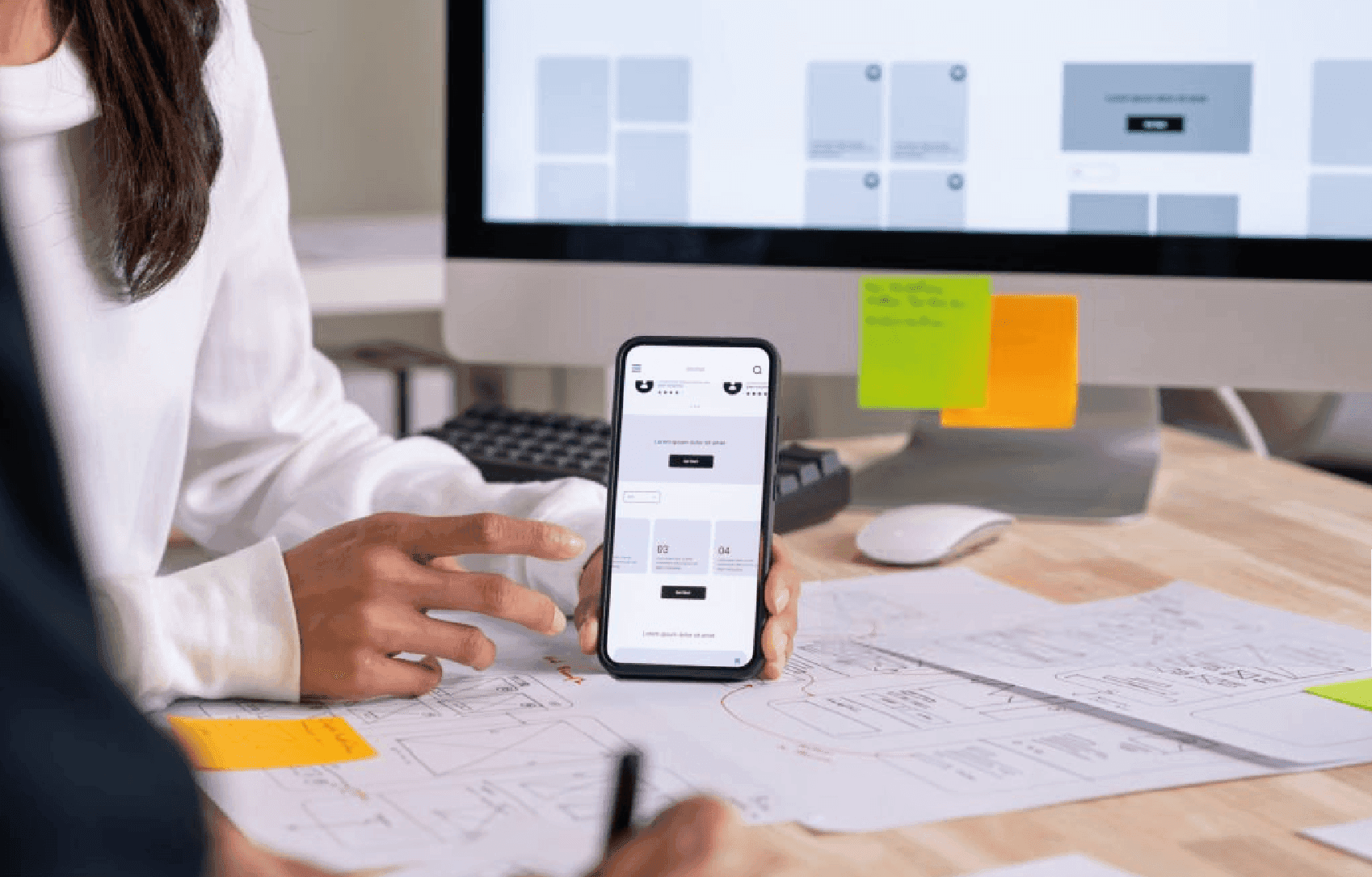
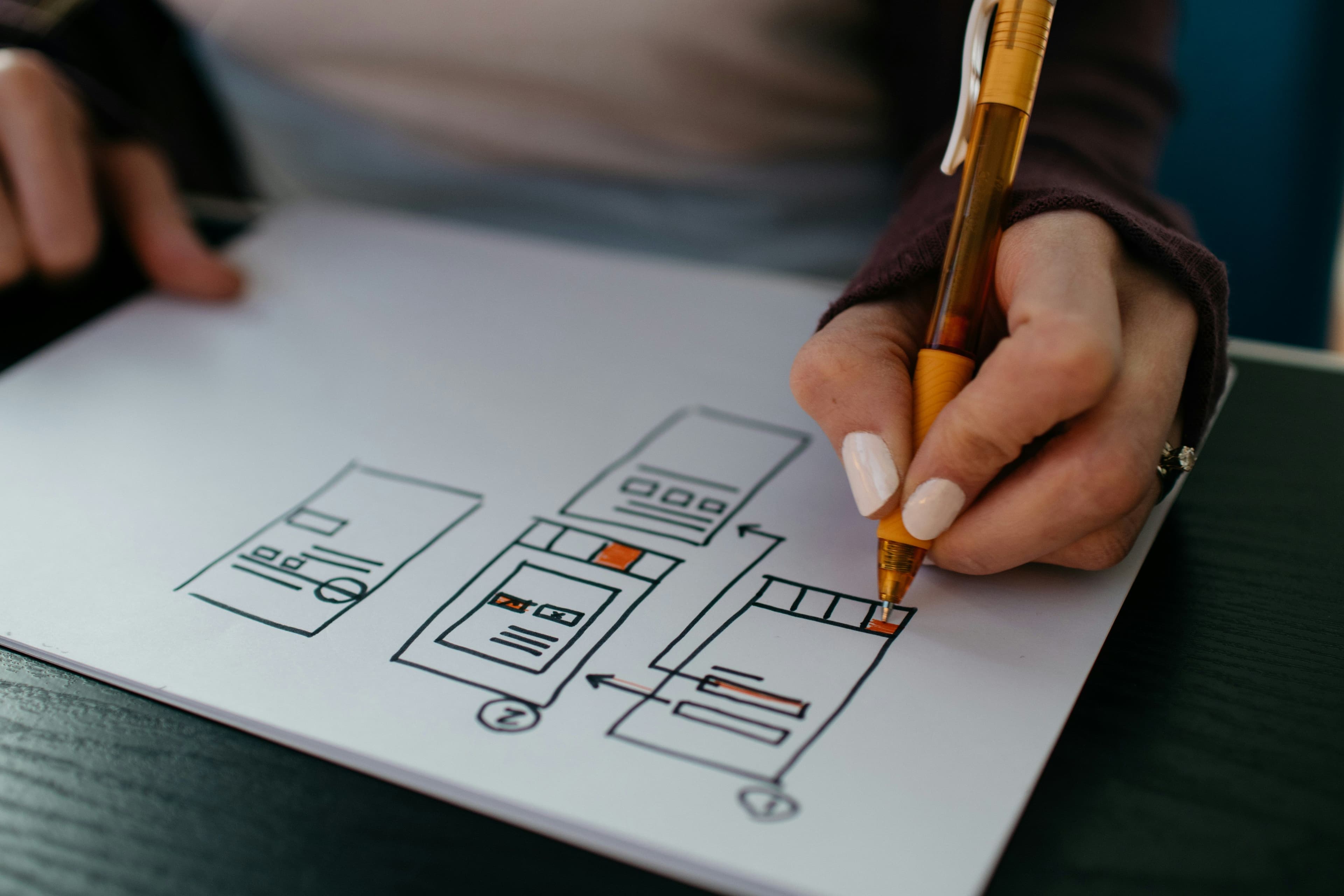
Forget about polished designs, coded prototypes, or having all your screens finished. The real value lies in testing when everything is still rough. A quick wireframe in Figma. A paper sketch. A clickable flow that’s 20% ready. The sooner you test, the faster you’ll catch problems before they get expensive. If something’s confusing at the sketch stage, imagine how painful it’ll be in production. Taking care of this early enough keeps fixes cheaper and learning faster.
3. Real users vs. your coworkers; why internal opinions can be an obstacle for product design
Don't get us wrong: internal feedback is vital for stakeholder alignment and assessing technical feasibility (it is the only way business and engineering constraints can be secured). However, when it comes to usability, it can easily generate a blind spot because your team members already have the "curse of knowledge," so they lack the objective perspective of a first-time user. They helped design it, so they know what every button is supposed to do. Real users don’t. They’ll hesitate, guess wrong, or stop altogether; and that’s exactly what you want to see before launch: the moments where they lose track, where they click first, where they give up.
4. Designing the test: guidelines, bias, and modern dimensions
Evaluating user experience isn’t a one-size-fits-all stage. To capture truly actionable insights and demonstrate professional rigor, product teams must address three critical dimensions of test execution:
a. Formulating neutral tasks as an anti-bias guard
The biggest failure in in-house testing is asking leading questions (e.g., "Can you find the upgrade button?"). Professional UX feedback loops rely on goal-oriented, open-ended scenarios ("Imagine you want to change your billing cycle. How would you do that?"). If you guide the user, you end up reinforcing your own internal assumptions rather than validating the objective design.
b. Inclusive design (accessibility compliance)
With the European Accessibility Act (EAA) in full effect, accessibility is no longer optional. Applying its principles early ensures your product is usable for everyone and legally airtight.
c. From observation to action, the synthesis phase
Evaluation generates raw, chaotic data. The value lies entirely in the synthesis: translating user friction into a prioritized backlog (blockers vs. cosmetic issues) to create a clear, actionable roadmap for your engineering team.
A note on qualitative assessment and market research: understanding when to use each method is key. Focus groups are great for exploratory conversations, though they are limited to capturing self-reported opinions rather than actual behavior. On the other hand, A/B testing excels at measuring statistical impact, but only after deployment. To validate usability before writing code, a qualitative approach is the standard.
5. The UX toolkit: choosing the right framework
To build a bulletproof routine, you need to match your immediate design milestone with the right methodology. Senior product leaders prioritize tactical precision over single fixed formulas.
While our full operational stack at Acid Tango spans dozens of specialized research practices, here is a synthesis of the core methodologies we deploy most recurrently to confirm decisions before they reach the development instance:
Goal
Method
When to Use
Validate information architecture
Card sorting
When structuring a new navigation menu, categorization, or sitemap based on user mental models.
Verify navigation paths
Tree testing
When you need to evaluate if users can find a specific item or setting within a text-only version of your menu hierarchy.
Test first impressions & copy
First-click / preference testing
When analyzing if the home screen layout is intuitive or deciding which visual design/headline direction drives immediate clarity.
Map complex, interactive flows
Moderated usability testing
When launching a high-friction user flow (like a checkout or fintech onboarding) and you need to observe real-time behavior and struggles.
Gather rapid, high-volume feedback
Unmoderated click-through tests
When validating a high-fidelity Figma prototype across dozens of users quickly before handoff to engineering.
6. Recruiting and logistics: sourcing the right users while avoiding bias
Testing only works if you do it with the appropriate users; people who actually resemble your target audience and share their exact problems, context, and goals. Don’t just grab whoever’s nearby. Rather than a logistical afterthought, user recruitment stands as a critical pillar of any sound product methodology.
To run a clean, professional sourcing phase, you must address 3 foundational pillars:
The value of small batches (the rule of 5)
A common misconception is that UX testing requires massive, costly cohorts. According to Jakob Nielsen's research, including 5 users is usually enough to uncover more than 85% of usability issues in a core user flow. Beyond that quantity, you quickly reach a point of diminishing returns where you start observing the same patterns over and over. It is always better to run multiple, iterative rounds with 5 users than a single, massive test with 20.
The power-user mirage
While emailing your most active users is a great shortcut for quick sessions, be careful not to build an immediate false safety net. Power users already understand your product's quirks: they will naturally bypass the friction points that would instantly freeze a new visitor
Sourcing and logistics
Reaching the best segments requires a mix of smart channels and clear incentives.
Channels: Use targeted intercepts on your website or app, build an organized in-house panel of users you can tap regularly, or run sessions through a dedicated remote-testing platform.
Execution: Make it easy with short signups, clear expectations, and small, competitive incentives to respect their time. The right users will tell you what you need to hear, not what you want to.
7. Embedded validation: the Acid Tango testing habit
At Acid Tango, we don’t treat UX tests as a checklist item at the end of a sprint. It's something we return to at every stage. When we sketch early ideas, we test them; also when we build high-fidelity prototypes. Real users stay in the loop consistently.
We have applied this rigor across numerous projects. For instance, in the case of Synergie’s enterprise HR platform, design validation was key to simplifying dense workflows and mass biometric signature processes. After optimizing these critical interactions, the platform scaled its operations, transitioning from managing an initial 80,000 contracts to processing over 200,000 additional contracts in just two years (pointing to the quiet but massive role usability plays when digital tools scale).
We are also proud to have collaborated on Unfear, an AI-powered app developed by Samsung and Cheil to support individuals with ASD. For a complex, purpose-driven project that went from concept to launch in just 5 months, actively involving end users from the start was vital. The final solution has reached over 5 million downloads and garnered more than 20 global industry awards.
Staying close to real users is what turns design choices into predictable results:
Usability issues are captured and solved before they require engineering hours.
Product concepts are confirmed against real user behavior before allocating development budgets.
The final product is clear, helpful, and highly adopted from day one.
If you are currently mapping out a new product, planning a complete platform redesign, or trying to fix a leaky conversion funnel, start earlier. Watch how your users interact. Listen to what frustrates them, and look closely at what they don’t say out loud. That is where your biggest growth opportunities are hiding.
Want to turn real user feedback into better product decisions? Let’s talk!←
References:
(1) Nielsen Norman Group. Usability ROI Declining, But Still Strong (2008). Available at: https://www.nngroup.com/articles/return-on-investment-for-usability/
(2) Nielsen Norman Group. Improvement Score Due to a Redesign (2006). Available at: https://www.nngroup.com/articles/improvement-score/
Discover the power of User-Centered Design (UCD) in creating digital products that resonate with your audience. Learn its key principles, benefits, and how to apply UCD for enhanced usability, reduced development costs, and long-term success.
API-First reframes the interface contract as the true architectural boundary of a product. This piece maps the design principles behind it, the Domain-Driven Design boundaries it protects, the ROI data behind adoption, and the concrete steps teams take to implement it in production.